
CIRS Recovery Program
“You are not navigating this alone.” - Katie Hendon
-
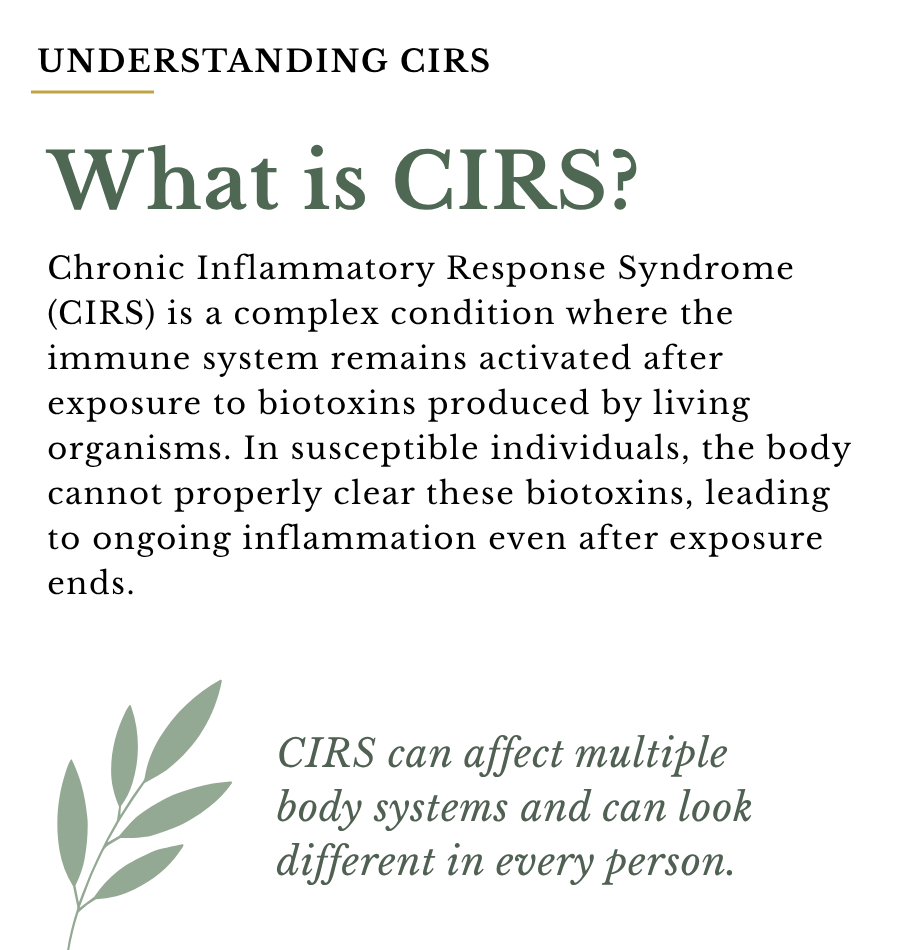
Because CIRS is a multi-symptom, multi-system chronic illness, it can look different for each person.
Common symptoms include (but are not limited to):
Neurological & Cognitive
Brain fog, memory loss, difficulty concentrating, confusion, disorientation, word finding issues
Pain Sensations
Unusual pain, ice pick pain, static shocks, buzzing feeling under the skin
Fatigue and Physical Weakness
Chronic fatigue, unrefreshing sleep, feeling physically weak
Musculoskeletal
Joint pain, morning stiffness, muscle aches, cramps & spasms.
Respiratory & Sinus
Chronic sinus congestion, shortness of breath, lingering cough
Eyes & Vision
Sensitivity to light, red eyes, blurred vision, tearing of the eyes
Gastrointestinal
Abdominal pain, bloating, diarrhea, constipation, nausea, appetite changes
Cardiovascular & Autonomic
Dizziness, vertigo, lightheadedness, POTS (Postural Orthostatic Tachycardia Syndrome)
Hormonal & Temperature
Temperature dysregulation (feeling unusually hot/cold), excessive thirst, frequent urination
Skin & Dermatological
Skin rashes, eczema, increased skin sensitivity
Psychiatric & Mood
Mood swings, anxiety, depression
Immune & Sensitivity
Multiple chemical sensitivities (MCS), frequent infections, mast cell activation syndrome (MCAS) symptoms
Mouth & Taste
Metallic taste in the mouth
-
Fibromyalgia
Chronic Fatigue Syndrome
Functional Abdominal Pain Syndrome
Irritable Bowel Syndrome
GERD
Chronic Headaches
Chronic Regional Pain Syndromes
Asthma/Shortness of Breath
POTS
Multiple Chemical Sensitivity
Histamine Intolerance
Mast Cell Activation Syndrome
“Atypical” Auto-immune Diseases
Multiple Sclerosis
PANS/PANDAS
Behavioral issues (children)
-
24-25% of the population carry specific genetic patterns (HLA-DR/DQ) that impair the immune system’s ability to recognize biotoxins and create antibodies, then eliminate the threat normally.
This explains why two people sharing the same environment may experience different health outcomes.
-
CIRS is a clinical diagnosis is made by putting together the puzzle pieces of exposure to previous water-damaged buildings and biotoxins, symptom cluster screening, lab markers of inflammation & immune regulation, and current environmental assessment.
No single test confirms CIRS. The pattern of findings is essential.
-
CIRS is treated using the Shoemaker Protocol, developed by Dr. Ritchie Shoemaker.
This protocol is a research-based, stepwise medical framework designed specifically for biotoxin illness.
It focuses on removing the patient from biotoxin exposure, reducing chronic inflammation, normalizing the dysregulated immune response, and restoring the downstream affects of CIRS.
Treatment is guided by objective laboratory data.